6 ways non-farmers can help those in the field
The first day of spring is more than a calendar milestone. For farmers, it’s the official start of a season of growth, literally. As winter’s chill fades, plans set months earlier are finally put into motion.
For many in agriculture, every decision carries weight: plant now or wait, how much input to apply, how to protect young seedlings from late frost. It’s a season filled with both optimism and risk.
Growing crops and running a farm requires both practical skill and deep knowledge of plant science, soil health, and modern technology. That’s where Chippewa Valley Technical College’s Agronomy Management program comes into play.
This two-year program equips students with hands-on training in precision farming, data management, plant science, and agribusiness, built around real farmland and the latest industry tools. Graduates leave the program with valuable credentials preparing them for today’s high-tech agricultural careers.
Right Choice Acres: A Living Classroom
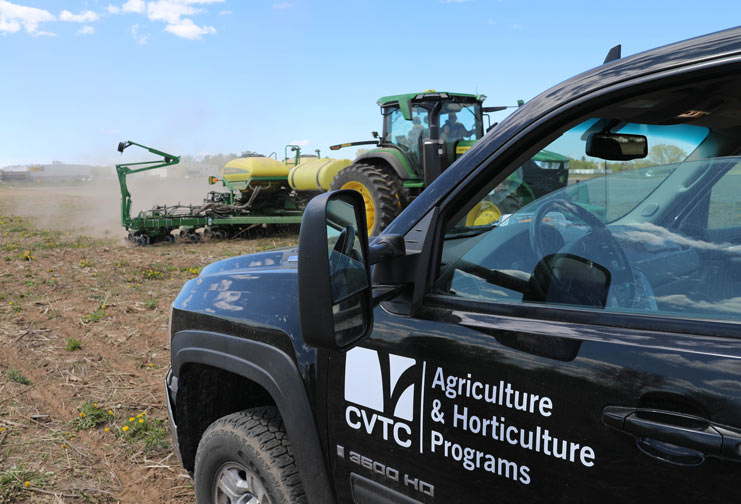
One of the most powerful examples of this hands-on learning is Right Choice Acres, a living farm classroom associated with CVTC’s agronomy instruction. Right Choice Acres spans hundreds of acres of working farmland where students plant, scout, and harvest crops as part of their coursework.
“It’s important to have this land at CVTC so we can help students get their hands dirty and learn real crop management,” said Skylar Ferris, agronomy adjunct instructor at CVTC. “Students make decisions about seed placement, monitor crop growth, assess pest pressures, and even harvest grain at the end of the season.”
Ben Halverson, a fellow agronomy adjunct instructor, agreed. He said, by engaging directly with cropping cycles, students connect textbook knowledge with the realities of plant growth and farm logistics.
“For our students, Right Choice Acres becomes the bridge between what they’re learning in the classroom and a career,” he said. “We give them opportunities to practice the same tasks farmers tackle every spring.”
The agronomy instructors, who have worked in the farming industry, said there are things consumers can do to help farmers.
1. Buy Local and Seasonal
One of the simplest and most impactful actions is purchasing food directly from local farms or businesses that source locally. In the Chippewa Valley, shopping local supports the broader agricultural ecosystem from small family farms to students gaining hands-on experience.
2. Understand the Realities of Farming
Spring on the farm can look beautiful from the outside with fresh green fields and baby animals, but it’s also one of the most financially and physically demanding times of year. Weather delays, rising input costs, and tight planting windows put enormous pressure on farmers. Taking the time to learn about modern agriculture, asking respectful questions, and avoiding the spread of misinformation helps more than many people realize.
3. Be Patient on Rural Roads
Spring means slow-moving equipment traveling between fields. Combines, tractors, and planters are large, wide, and not built for speed. Giving farmers extra space, slowing down, and passing cautiously keeps everyone safe during one of the busiest seasons of the year.
4. Support Agricultural Education
Strong agricultural communities depend on strong agricultural education. Supporting scholarships, workforce programs, or local technical colleges helps ensure the next generation of farmers and agronomy professionals is prepared.
5. Advocate for Policies That Support Farmers
Pay attention to local and state agricultural issues. Policies around land use, water quality, trade, and rural infrastructure affect farmers daily. Voting and engaging thoughtfully in conversations about agriculture can shape a more stable environment for producers.
6. Show Appreciation
Sometimes the simplest support is acknowledgment. Farming can feel isolating, especially during long spring days when work starts before sunrise and ends well after dark. A message of thanks, a supportive comment, or simply recognizing where food comes from matters.
The first day of spring marks the start of something big for farmers. Non-farmers may not be planting seeds, but through choices and community support, they can absolutely help them grow.